

The 2030 Intelligence Glut
What If AI Wins but AI Stocks Lose?

I think the bulls are right about the technology. It’s going to work. I also think that’s bad news for many of the companies building it.
Every few months the models get better and the revenue flowing to the AI leaders grows, and almost everyone treats that as a reason to own the stocks.
Commodities have never paid out that way. When supply floods in, the price falls to whatever the cheapest willing seller will take, and it doesn’t care how good the product got.
Back in February, Citrini Research ran a piece of speculative financial history called
“The 2028 Global Intelligence Crisis”
A memo written from the future about what cheap machine intelligence does to labor, consumption, and credit. I’m borrowing the format for a narrower question.
What does abundant intelligence do to the people selling it?
This is a scenario, not a prediction. But every input is in filings and investor-facing disclosures.
Two ideas motivate the thesis:
Growth only creates value behind barriers to entry.
Commodities transact at the marginal cost of the marginal provider.
Commodity Economics 101: say three companies each produce 100 barrels of oil, at costs of $40, $50, and $60 per barrel. If demand is 150 barrels, the price settles at $50 based on demand. The $60 producer gets pushed out.
Hold onto that last part.
The Consequences of Abundant Intelligence: The Supply Side
2x2 Capital Investor Memo
July 21st, 2026 July 21st, 2030
Frontier-grade inference settled at $0.19 per million tokens this morning, down 3% on the week. Utility grade cleared at three cents. Nobody noticed. Commodity prices only make headlines when they spike.
Four years. That’s how long it took the scarcest input in economic history to start trading like natural gas. There is a benchmark grade (”frontier-equivalent,” defined against the Intelligence Index), a utility grade, a spot market, a forward curve, and — since CME listed cash-settled inference futures in 2029 — a term structure that podcast guests argue about.
The July 2026 version of me found this outcome plausible. The July 2026 market found it unthinkable, which is why the ledger of the last four years reads the way it does.
How it started
In the summer of 2026, momentum strategies printed their worst two weeks on record. SpaceX’s IPO cracked first, and everyone holding pre-IPO AI paper asked the same question about the listings to come: if the tape wobbles, can OpenAI and Anthropic still raise enough to fund the hardware binge?
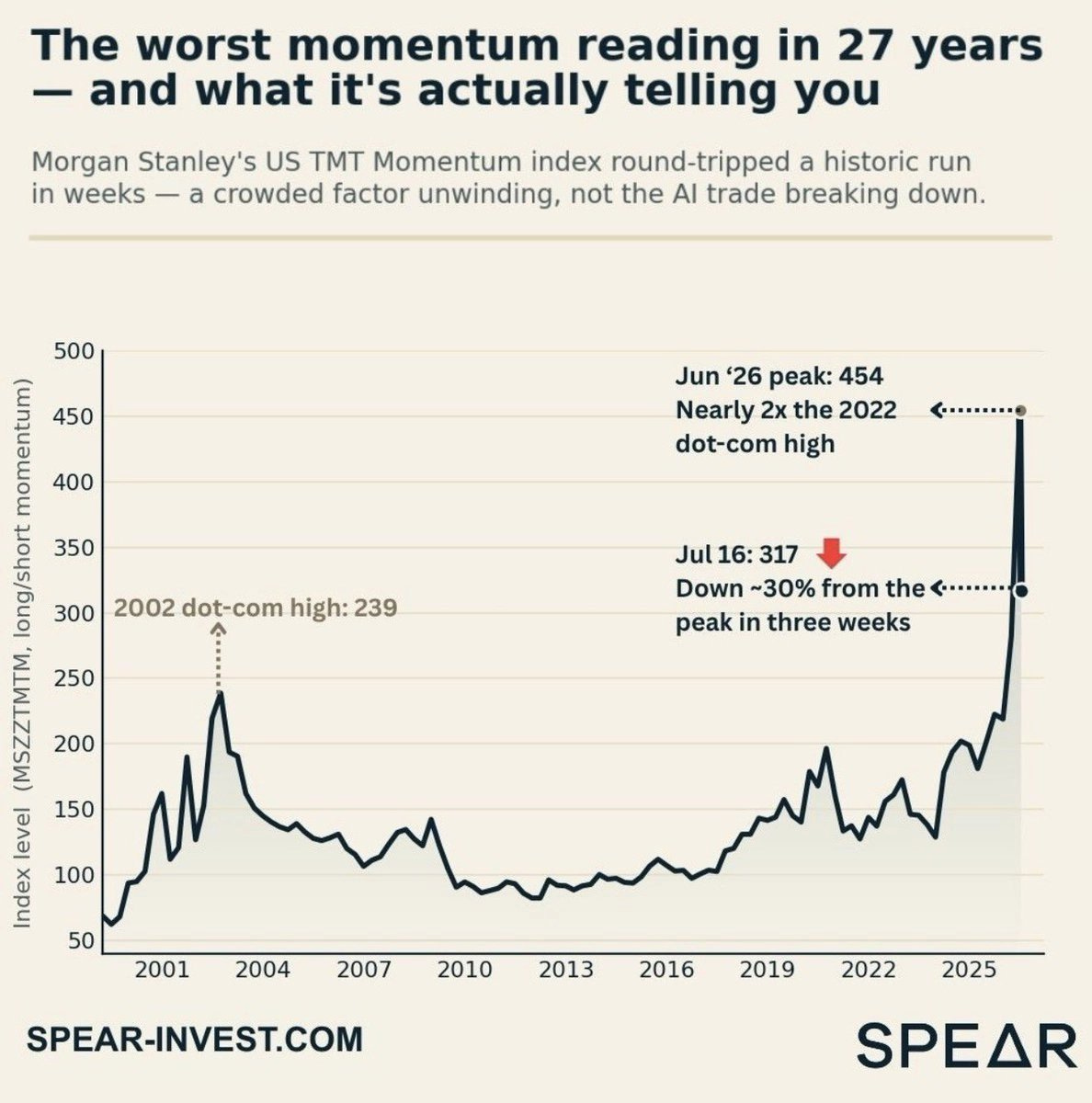
That was the visible anxiety. The important story was quieter, and it was sitting in public transcripts and X posts.
Brian Chesky told an interviewer Airbnb leaned heavily on Alibaba’s Qwen: “It’s very good. It’s also fast and cheap.“
DoorDash co-founder, Andy Fang, publicly discussed routing lower-level work to Moonshot’s Kimi.
Amazon Bedrock, Azure, and Vertex openly sold Chinese open-weight models with enterprise wrappers. None of it was a secret.
Satya Nadella, Microsoft CEO Posted a memo pointing out:
“In a world where software has real marginal cost for the first time, how do we ensure frontier benefits are diffused across the entire ecosystem? The key is to optimize the cost-to-outcome frontier in real world context. In practical terms, that means using the right model for each task...“
The Kimi K-3 AI model scored 57.1 on the AI Intelligence Index against 59.9 for Claude Fable 5 — 95% of the capability at one-third the price.
On OpenRouter, the majority of tokens were already flowing to Chinese open-weight models. Yes, OpenRouter customers skewed price-sensitive. Early adopters usually do.
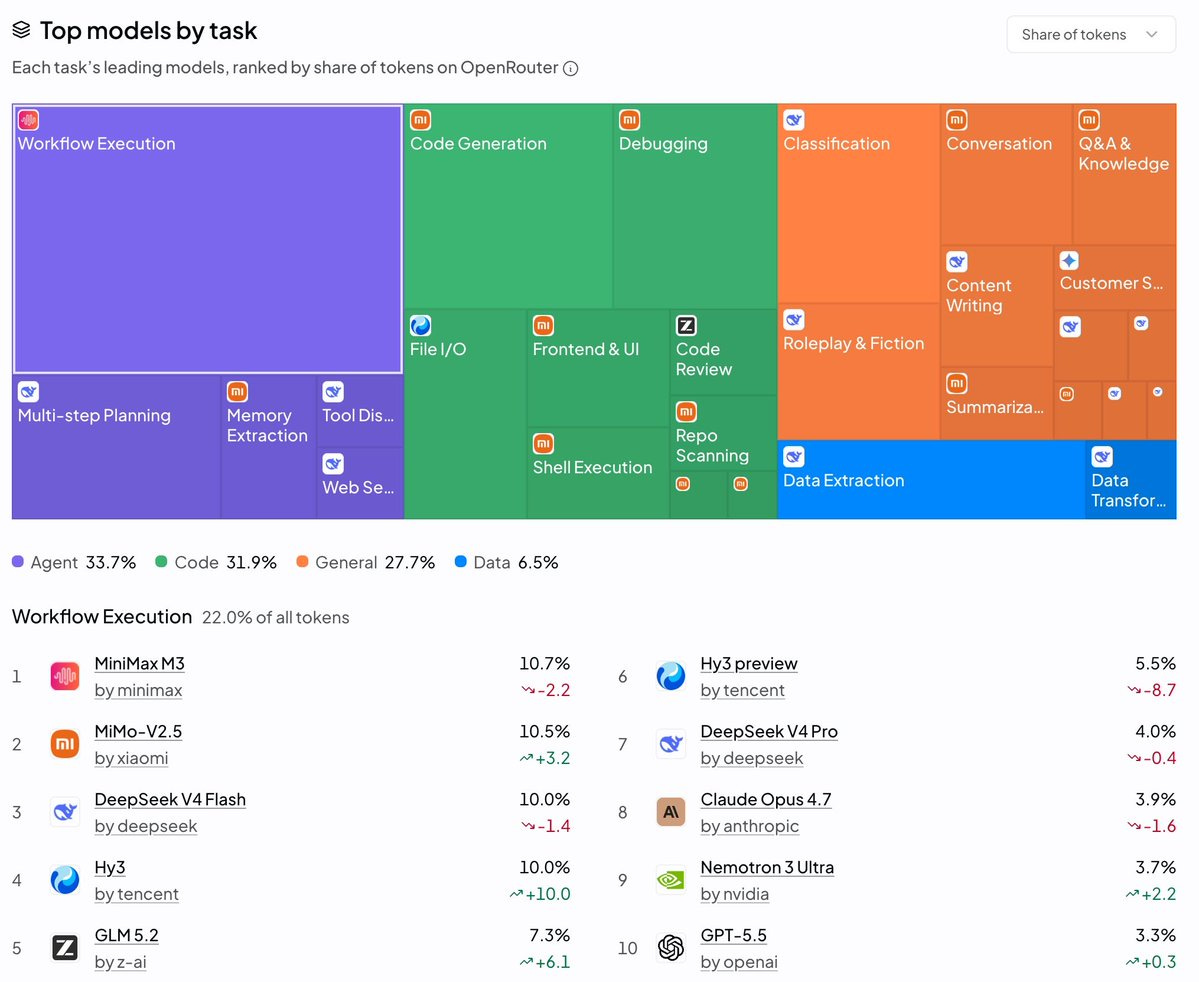
Enterprises had just lived through a year of astronomical API bills, and procurement figured out what the engineers already knew: 95% of tasks clear on a cheaper model, and the rare failure can be retried on a frontier model for pennies at the margin.
The trend flipped from Tokenmaxxing to Valuemaxxing. After all, why hire a PhD physicist when a High School Grad will do?
The merit order
By 2027, almost nobody bought intelligence the way they had in 2025 — one model, one API key, one invoice. Agentic harnesses (Openclaw and Hermes were the early ones) triaged every task by its intelligence requirement and dispatched it to the cheapest model that cleared the bar.
Power traders recognized the structure on sight. It was merit-order dispatch.
Open-weight models became baseload: cheap, abundant, always on. Frontier models became peaker plants: called up for the hardest 4-5% of tasks, billed at peak rates, idle otherwise.
CIO SURVEY: 78% OF ENTERPRISE INFERENCE NOW ROUTED THROUGH MODEL-ARBITRAGE MIDDLEWARE; FRONTIER MODELS RECEIVE 6% OF TOKENS AND 39% OF SPEND | March 2028
Two things about that stat: The 6% confirmed commoditization. The 39% showed where frontier pricing power survived — Basic Science, Deep Mathematics, Biotech Research, High level orchestration and planning, anywhere intelligence was the chokepoint. Peak power always carries a premium. Peaker plants still rarely mint fortunes.
The demand side, meanwhile, went vertical. Token consumption rose roughly 50X between 2026 and 2030 as agents became ambient. Jevons won, as he usually does. Total spend on intelligence grew every single year of the glut.
Low-cost ASICS (Application-Specific Integrated Circuit) out of China and startups like Etched reduced inference cost dramatically in 2028, all while Frontier model performance stagnated as scaling laws hit limits. Instead, The top end models accelerated algorithmic strides that repriced the cost to compute across the whole curve every few months.
The glut was a margin-location story from the start: the revenue pool expanded while the profit pool slid down the cost curve and settled at the bottom.
Marginal cost of the marginal provider
Commodities transact at the marginal cost of the marginal provider. At equilibrium, the low-cost producers earn the economics and the high-cost producers earn the experience.
The marginal provider of intelligence was a Chinese open-weight lab giving the model away.
Open-weight labs drove the licensing value of undifferentiated model intelligence toward zero. The price floor for delivered intelligence was increasingly established by whoever could serve those weights at the lowest all-in compute cost.
A leaked Investor call with Deepseek’s founder in July 2026 revealed:
“Open source is a core belief… for us, it is our original intent.”
“We will open-source, and then even our strongest model will probably be open-sourced too. I can’t see what good closed-source does.”
Beijing announced the strategy out loud. Xi’s 2026 speech urged the industry to “encourage open source, openness, collaboration and sharing,” tying open AI directly to the physical economy — the one China dominates.
Ben Thompson of Stratechery named the playbook at the time: commoditize your complements. Free intelligence made Chinese robots, drones, and factory systems better, and China collected the margin in atoms.
Bloomberg Reported, Alibaba switched tack from closed-source models to making Qwen 3.8 Max open source after Xi’s speech:
”Developers can now access Qwen3.8 Max through Alibaba’s coding platforms, including Qoder. Alibaba plans to make the model open-weight soon, expanding access beyond the preview release.” ~July 2026
China will play the role of offering cheaper services in a systematic way...
Chinese-made AI might have a cheaper price… systematically low...
~ Liang Wenfeng, Deepseek Co-Founder
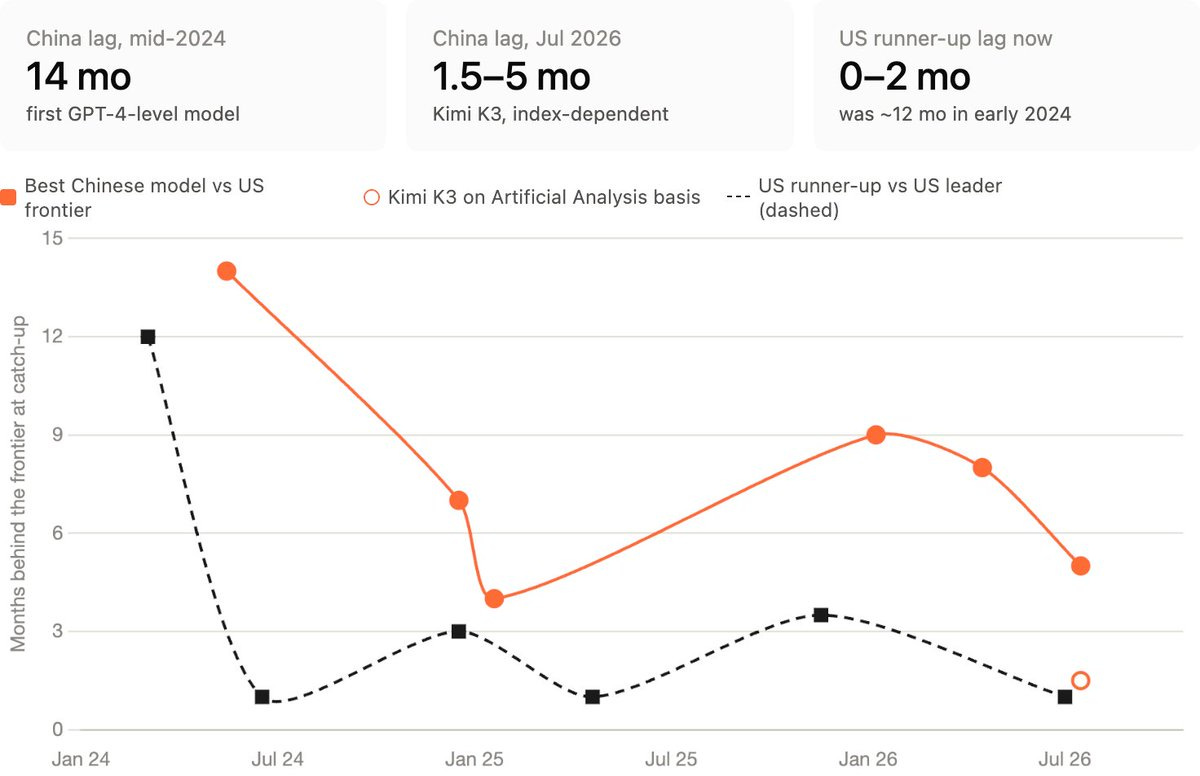
Washington tried to defend the moat. Treasury Secretary Bessent threatened distillation sanctions against Chinese labs in 2026, and enforcement promptly ran into an inconvenient property of the product: Every public frontier API was, functionally, a tutoring service for its own competition. The capability lag from frontier to open-weight compressed from nine months in 2024, to 2-6 months in 2026, to roughly six weeks by 2028.
The price of thinking (frontier-equivalent, $ per million output tokens, quality-adjusted)
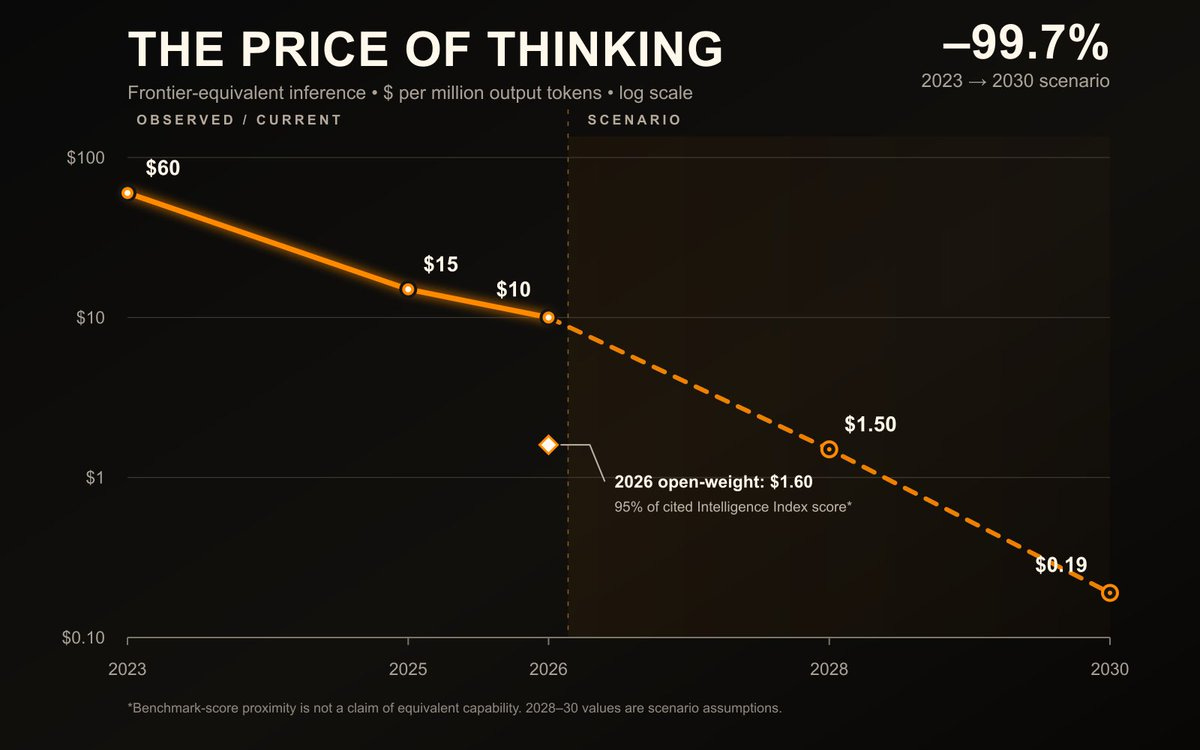
The cost curve wars
If price converges to the marginal cost of compute, the investable question becomes: who has the lowest cost of compute?
The answer was visible in 2026 to anyone reading the footnotes.
Google’s TPUs were reportedly 65-70% cheaper to run for inference — Midjourney publicly validated 65%+ savings after migrating.
Amazon’s chips showed roughly 50% savings. Both companies guided to more, and Google leaned in further with the Frozen V2 line.
Anthropic — a frontier lab, a flagship Nvidia customer — contracted for access to 1-2 million Google, Amazon and AMD chips over the following two years.
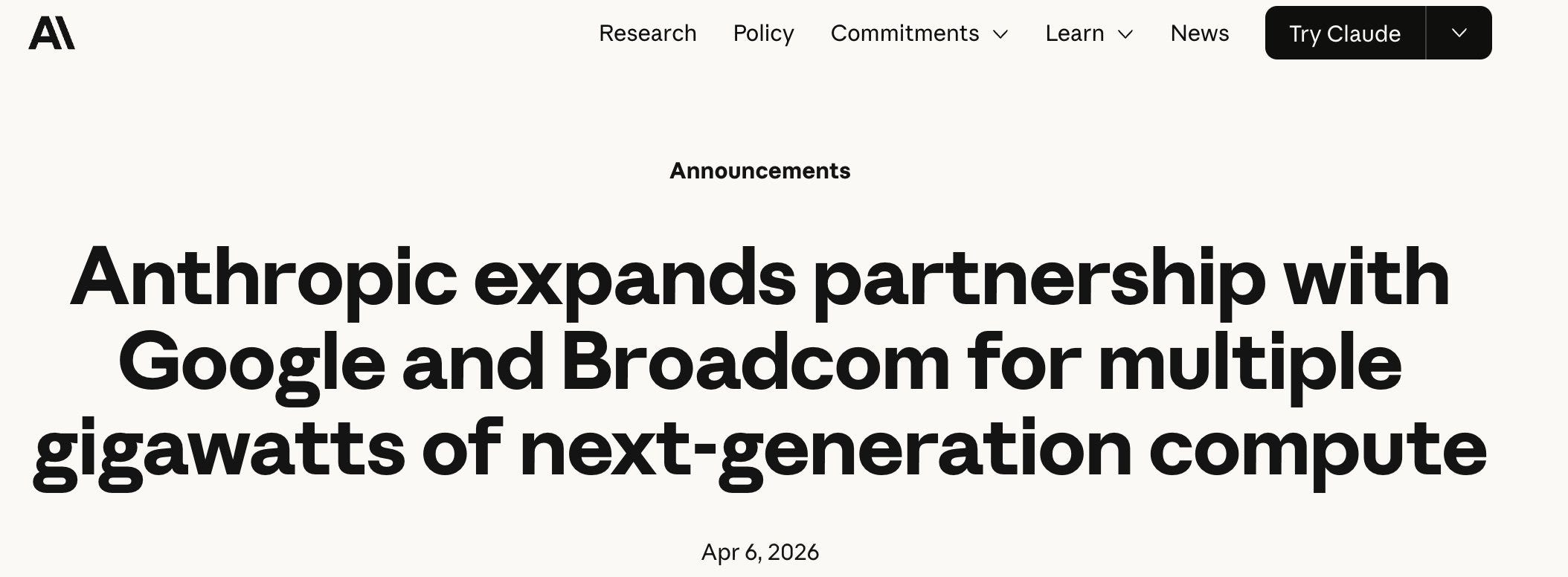

2026 was also the year inference passed training in total compute, and that mattered more than it seemed. GPUs were the right tool for a research race; ASICs were increasingly the right tool for a utility.
Share followed the workload. The sell-side’s “~70% ASIC by 2028” calls landed in 2029 — directionally right, chronologically early.
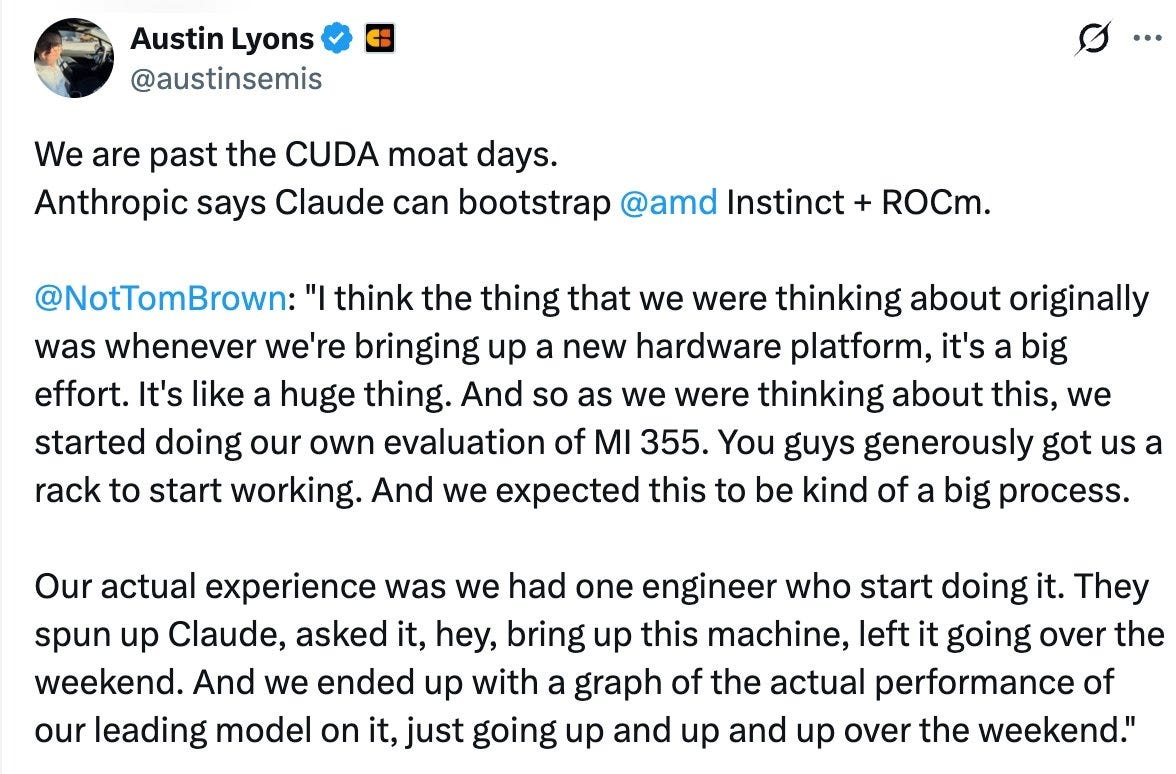
Nvidia’s market went from “the only game in town” to the most competitive industry on earth. Fighting to keep their margins in a world where well capitalized competitors were attacking from all angles.
2028
NVIDIA DATA CENTER GROSS MARGIN PRINTS 57.8%, FIRST SUB-60 QUARTER SINCE 2023; COMPANY ANNOUNCES MULTI-YEAR INFERENCE PRICE GUARANTEES FOR CLOUD PARTNERS | Bloomberg, August 2028
To be precise about what happened to Nvidia: revenue kept growing through 2028, and 2029 profit dollars exceeded 2026.
The stock still spent three years digesting, because a 75% gross margin business repriced toward a 55% one, and the multiple went from pricing a tollbooth to pricing a cyclical. Cisco earned more in 2004 than in 2000. Ask a Cisco holder how the stock treated them anyway.
The neocloud unwind
Every commodity cycle produces the same character: the undifferentiated high-cost producer who levered up at the top.
This cycle it was the neoclouds — resellers paying full freight for Nvidia silicon, borrowing against the chips, and selling compute into a falling price curve. The model had one load-bearing assumption: that the collateral would hold value longer than the debt amortized. Token prices halved every year, some years twice. Depreciation schedules said five to six years. The chips disagreed.
MOODY’S DOWNGRADES $60B OF GPU-BACKED DEBT ACROSS ELEVEN NEOCLOUD ISSUERS, CITING ‘ACCELERATED COLLATERAL OBSOLESCENCE AND STRUCTURAL DECLINE IN INFERENCE PRICING’; LARGEST SINGLE-SECTOR ACTION SINCE ENERGY IN 2015 | April 2029
The largest pure-play reseller restructured that summer. Cards bought at $30,000 cleared at auction under $4,000.
The reproduction cost of a neocloud was a purchase order and a power contract, so its earnings power was always on loan from the shortage.
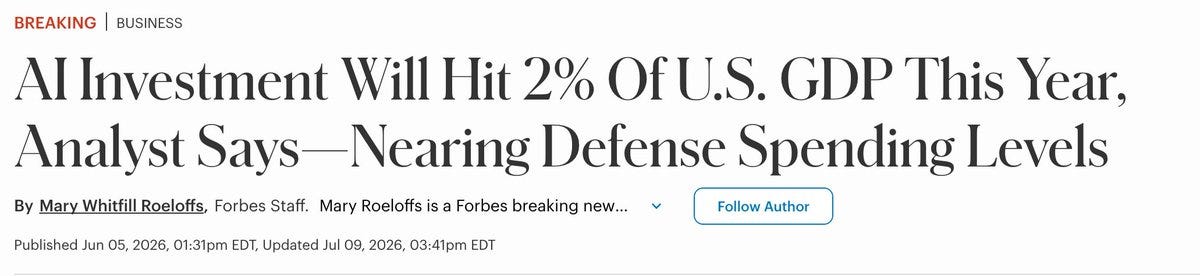
A shortage the the world’s largest companies had invested trillions to solve.
What happened to the labs
When HuggingFace was inadvertently attacked by “ChatGPT 6”, they didn’t turn to Fable 5 or GPT 5.5 to fight the incursion. They turned to Chinese open-source models that “allowed” cybercrime related work to respond...
Here was the 2026 problem nobody could underwrite: how do you IPO a commodity producer at a franchise multiple?
You don’t. So the American AI labs stopped being commodity producers — or stopped being.
OPENAI PRICES IPO AT $830B, BELOW ITS FINAL PRIVATE ROUND; PROSPECTUS MENTIONS ‘DEVICES’ 41 TIMES, ‘BENCHMARK’ TWICE | November 2027
OpenAI got out first, listing as a consumer distribution and devices company that happens to train models. The model became the loss leader; the subscriber relationship became the product. The multiple has argued with itself ever since, the way consumer-hardware multiples do.
Anthropic waited and re-underwrote itself around the harness: agents wired into enterprise workflows, connectors, audit trails, the accumulated switching costs of ten thousand deployed processes. By the time it listed, the roadshow barely mentioned benchmark scores. It priced like enterprise software because, by then, it mostly was one. The model is the loss leader. The workflow is the moat.


Labs four through seven — the ones that stayed pure-play frontier — consolidated into hyperscalers or pivoted vertically, into law, medicine, and defense, where proprietary data and regulatory approval still function as barriers to entry. Some Vertical intelligence kept its pricing power thanks to customer captivity plus data nobody else can get.
The market did the math late, but it did the math. Where there was no barrier, growth created no value, and the equity converged toward reproduction cost. Where there was lock-in, distribution, or proprietary data, franchises formed and got paid.
Who got paid
The 2030 ledger, in descending order of how loudly people denied it in 2026:
The integrated low-cost producers. Google ran the full stack — silicon to model to distribution — and served intelligence at a cost nobody else could rent.
Amazon followed suit, doubling down on ASICs: own the shelf and tax every product on it. AWS carried every model, the Chinese ones included, and let the price war be someone else’s income statement. Commodity gluts are kindest to the lowest-cost producers. Despite that, the top Hyperscalers saw ROIC fall during this period, as they fought in a crowded market to keep a foothold in the “Next industrial revolution.”
Chinese ASICS caught up in efficiency by 2029 and took much of the cost sensitive compute ex-US with structurally lower costs to serve.
Watts. The binding constraint migrated from wafers to megawatts around 2027. Tokens-per-kilowatt-hour became the industry KPI, turbine slots sold out to the mid-2030s, and the most reliable AI trade of the whole period was sitting in the interconnection queue. The people who financed generation own a royalty on thinking.
The lock-in layer. The harnesses, agent platforms, and application software that survived did it with switching costs — deployed workflows, compliance surface, data gravity. Friction, chosen deliberately and priced accordingly.
China’s physical complement. Free intelligence, expensive robots. The margin moved into atoms, exactly as advertised in Xi’s 2026 speech. China’s Lead in EVs translated well to robotics, aided by cheap intelligence.
The buyer. The customer captured most of the surplus, which is what a glut does. Cognition at two dimes per million tokens subsidized every business that uses thinking as an input — which turned out to be all of them.
Intelligence Scarcity
For all of recorded economic history, intelligence was the scarce input, and every valuation framework quietly assumed it would stay that way.
The supply curve broke the assumption. Scarcity migrated: to energy, to distribution, to proprietary data, to physical capacity, to trust. Capital that followed the migration survived. Capital that stayed parked in “AI exposure” as a category learned the difference between a revenue pool and a profit pool.
Greenwald’s rule survived contact with the machines: growth creates value only behind barriers to entry. In 2026, the market capitalized commodity growth at franchise multiples. By 2030, it remembered cash is king.
-----
But you’re not reading this in July 2030. You’re reading it in July 2026.
Momentum just had its worst 3 weeks on record and the IPO slate is wobbling. Kimi K-3 sits at 3 points below Fable 5’s score at one-third the price (and supply constrained). Anthropic just contracted for a million-plus non-Nvidia chips. ASIC-based AI server shipments are growing at roughly triple the rate of GPUs this year. Inference compute just passed training. Every fact from the 2026 half of this memo is already true today. Only the second half is fiction.
The scenario acts as a filter. For every AI relevant position:
1- Where does this sit on the cost curve, and who sits below it?
2- Does the moat survive intelligence at near-zero marginal cost, or was the moat intelligence itself?
3- How long until the intelligence supply/demand imbalance clears w/ trillions in spending aligning to solve this one problem?
And the bear case on the scenario: If recursive self-improvement finally kicks in, the leader’s lead compounds and the frontier premium re-widens instead of collapsing?
If high-stakes agentic work demands frontier reliability for far more than 5-10% of tokens, peak pricing carries more of the economics than this memo assumes.
If Beijing’s labs stop publishing weights, the marginal provider shifts.
If AGI is not just achieved, but a true fast takeoff occurs, beyond our imagining, with Dyson spheres by 2035? (this one is more for fun).
I assign none of these zero probability.
On our current path though, the trajectory points towards Intelligence becoming increasingly commoditized, and commodity producers can’t hold price let alone 100X sales multiples when supply normalizes as a result of an unprecedented supply ramp. Whether we like it or not, Adam Smith’s invisible hand will guide us to the final path.
PS: This is a thought exercise, and not a prediction.